I've photographed more events at the Seawell Ballroom than I can count — corporate dinners, nonprofit galas, award ceremonies, product launches. If there's a Denver event photographer who knows this room, I'd like to meet them, because I'm fairly confident I've spent more hours here than most.
This guide is for event planners, corporate teams, and nonprofit directors who are booking the Seawell and want to understand what photography there actually looks like — what's possible, what's challenging, and what you need to know to get images worth using in your annual report, your press release, and your donor newsletter for the next five years.
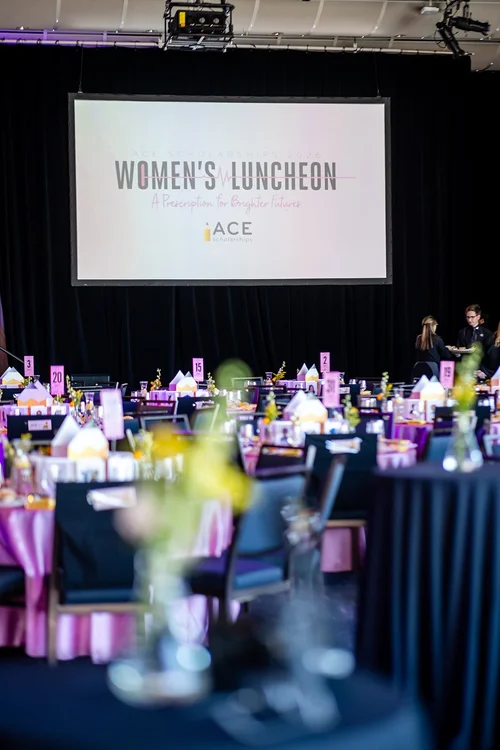
"The Seawell is one of the most photogenic rooms in Denver. It's also one of the most technically challenging. The difference between good photos and great photos here comes down to one thing: whether your photographer has shot here before."
— Alyson McClaran, after approximately 30 events at the SeawellThe lighting — what you're actually working with
The Seawell's signature look comes from its chandeliers — warm, amber-toned light that gives every image a glow that feels expensive. This is genuinely beautiful and it's a big reason why photos from events here look so good. But it's also deceptively difficult to work with.
The chandeliers throw a lot of light in the center of the room and significantly less at the edges. During cocktail hour, when guests are moving freely throughout the space, this creates a challenge: you'll get beautifully lit shots of people standing near the center, and considerably darker backgrounds once you move toward the perimeter. If your photographer doesn't know this going in, you'll end up with half your cocktail hour shots looking underexposed.
Ask your venue contact about the room wash lighting settings before your event. The Seawell's house lighting can be adjusted independently from the chandelier system. A slightly raised room wash during cocktail hour creates much more even light across the full space — and your photographer will thank you.
During dinner service, the lighting typically drops to a more intimate level. This is when the room looks its most dramatic and cinematic — but it also means your photographer needs to be comfortable shooting at high ISO values with fast lenses. I shoot the Seawell with a 24-70mm f/2.8 and a 70-200mm f/2.8, which lets me work the room without flash during dinner without sacrificing image quality.
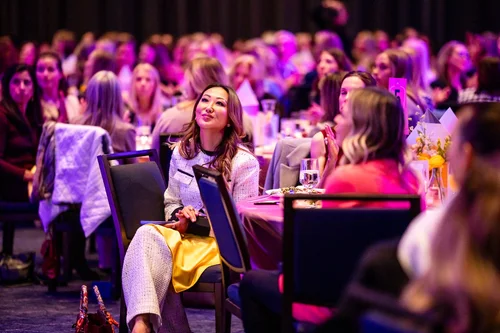
The best photo spots in the room
Here's something you won't find on the venue's website: the three spots in the Seawell that consistently produce the best photos, and why.
1. The main entrance staircase
The grand staircase leading into the Seawell from the lobby level creates a natural frame for arrival shots and candid moments. The lighting here is typically the most consistent in the venue — warm, even, and flattering. I always spend the first 20 minutes of cocktail hour working this area because it consistently produces images that work for PR and marketing use.
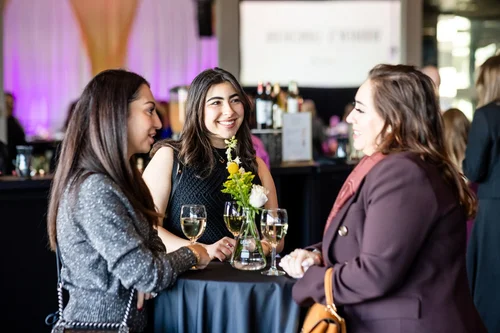
2. The bar area under the chandelier cluster
The Seawell's main bar is typically positioned under the densest concentration of chandeliers. This creates naturally beautiful lighting for candid conversation shots — the kind that make donors and sponsors look like they're having the time of their lives. These are the photos that move people to buy a table next year.
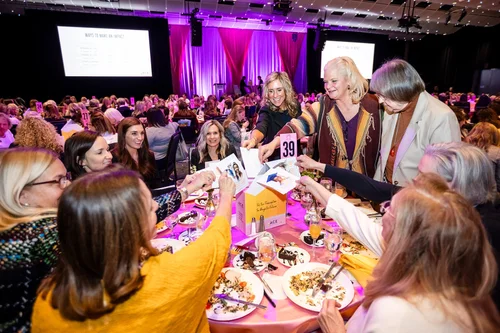
3. The stage, from the back third of the room
For keynote speakers and award presentations, I typically position myself in the back third of the room with a 200mm lens. This gives you a compressed perspective that puts the speaker in context with the audience — a sea of tables stretching toward the stage. These are the shots that end up in annual reports. Close-up stage shots are easier to get but tell less of the story.
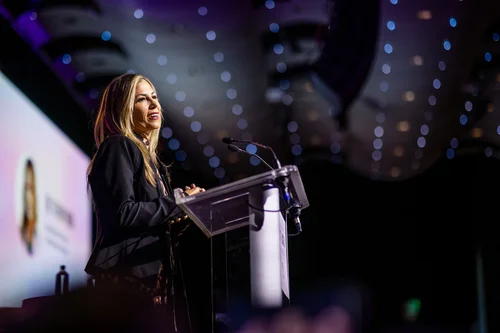
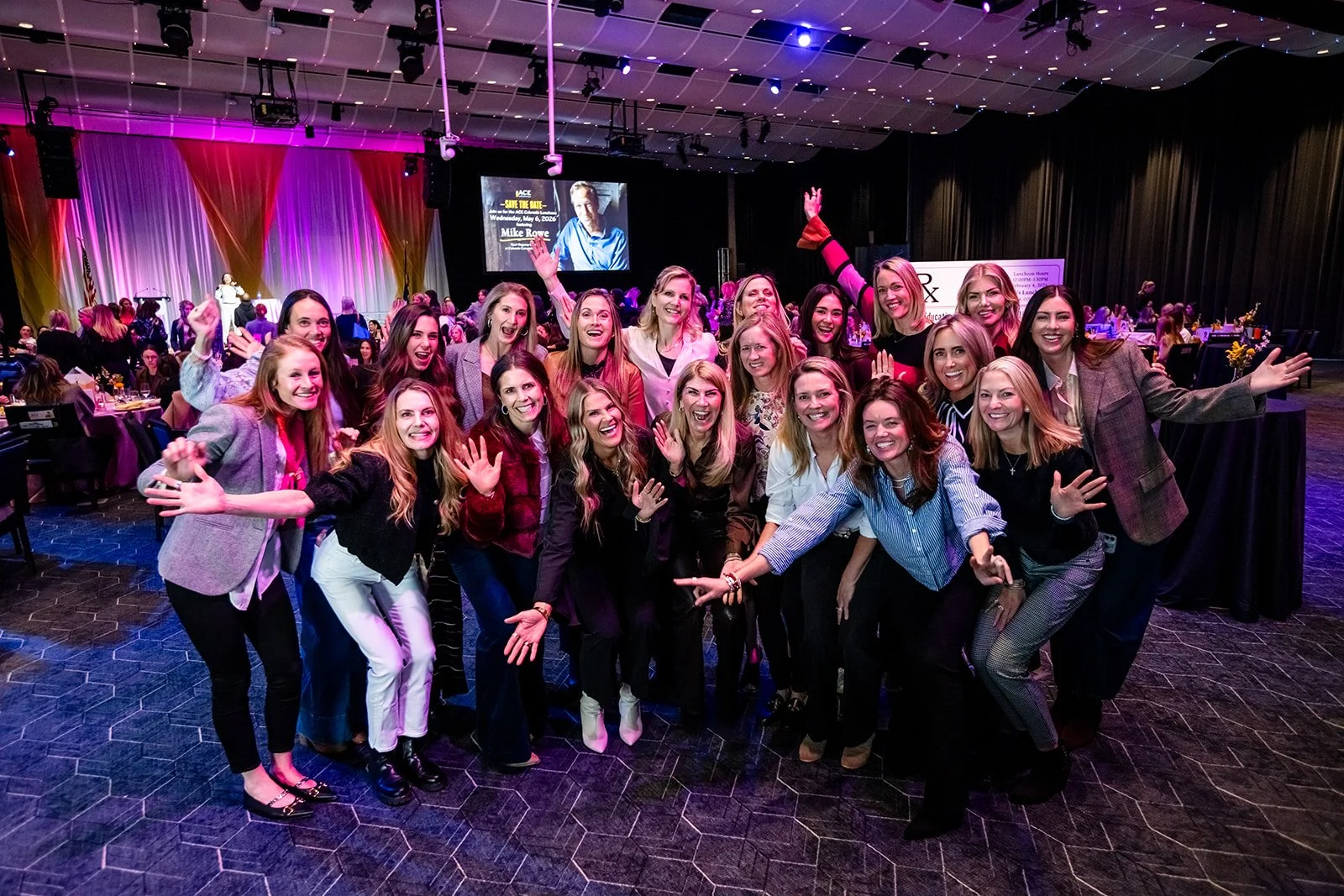
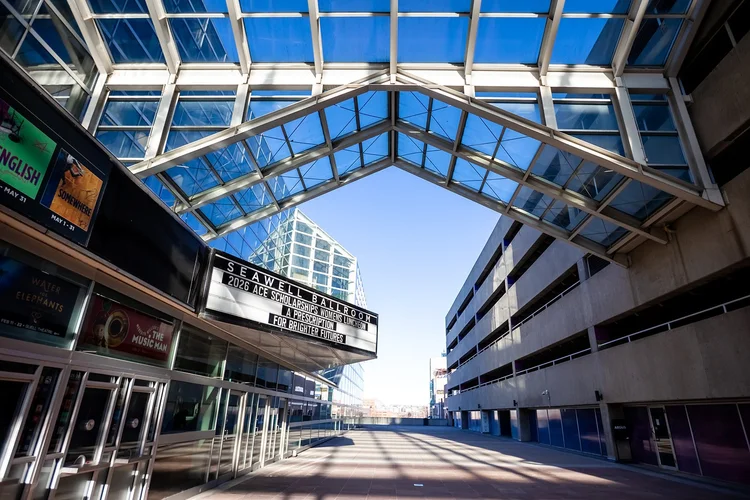
Real events shot at the Seawell Ballroom and Denver Performing Arts Complex
Logistics every event planner should know
A few practical things I've learned from shooting here repeatedly that can affect your photography timeline and results:
- Load-in window matters for equipment: If your photographer is bringing lighting equipment (strobes, stands, etc.), confirm the load-in window well in advance. The Seawell is in an active performing arts complex — there can be concurrent events in other spaces that affect elevator access.
- The room changes dramatically as it fills: An empty Seawell looks very different from a full one. The best wide-room establishing shots typically happen in that 30-minute window after the first guests arrive but before the room reaches full capacity.
- Dinner service is the hardest hour: Once guests are seated and lights drop for dinner, movement becomes restricted. Brief your photographer on your program timeline so they can position strategically before each course change.
- The atrium outside is underused: The Seawell opens onto the Denver Performing Arts Complex atrium, which has beautiful architecture and good natural light during daytime events. For daytime conferences, this is worth 15 minutes of shooting time for environmental portraits and event context shots.
"Every event planner I've worked with at the Seawell who does a pre-event walkthrough with their photographer gets better photos. It takes 20 minutes and it changes everything."
— Alyson McClaranWhat to ask your photographer before booking for a Seawell event
If you're interviewing photographers for an event at the Seawell — or any Denver venue — here are the questions worth asking:
- "Have you shot at this venue before?" — Venue familiarity is a genuine advantage. A photographer who knows the Seawell's chandelier lighting won't waste your cocktail hour figuring out their exposure settings.
- "Can I see photos from a similar event type?" — A gala portfolio is different from a conference portfolio. Make sure you're seeing work from the same type of event you're planning.
- "What's your turnaround time for events like this?" — If you need images for a press release within 48 hours, ask about this upfront. Not all photographers offer rush delivery.
- "What's included in the licensing?" — For corporate and nonprofit events, you need commercial-use rights. Make sure this is explicit in the contract, not assumed.
Why the Seawell keeps getting booked — year after year
I've noticed something after shooting here repeatedly: organizations that hold one event at the Seawell almost always come back. There's a reason for that. The room does something to an event that's hard to manufacture elsewhere — the chandeliers, the scale, the history of the building — it signals to your guests that this matters. That you invested in the evening.
From a photographer's perspective, that signal translates directly into better images. Guests who feel like they're somewhere special carry themselves differently. They stand taller, they engage more genuinely, they let themselves be photographed. The venue is doing part of my job for me. That's rare and worth recognizing when you're weighing your options.
If you have an event coming up at the Seawell and you want a photographer who already knows the room — the light, the timing, the angles that work — I'd love to be part of it.
Have an event at the Seawell coming up?
I've shot more events here than I can count. I know the lighting, the load-in, and exactly how to position for the shots that end up in your annual report, your press release, and your next year's invitation. Let's talk.
Check my availability →